
Hearing Health one-pager
Damaging your hearing by attending a concert or rave should NOT be the norm and you shouldn't have to choose between enjoying the music and protecting your hearing. In the US, there are currently no federal limits on how loud music events can be for audiences and artists alike, so managing safe listening (unfortunately) largely falls on the individual. Luckily, there are solutions to stay safe while still getting loud. The most critical element is education!
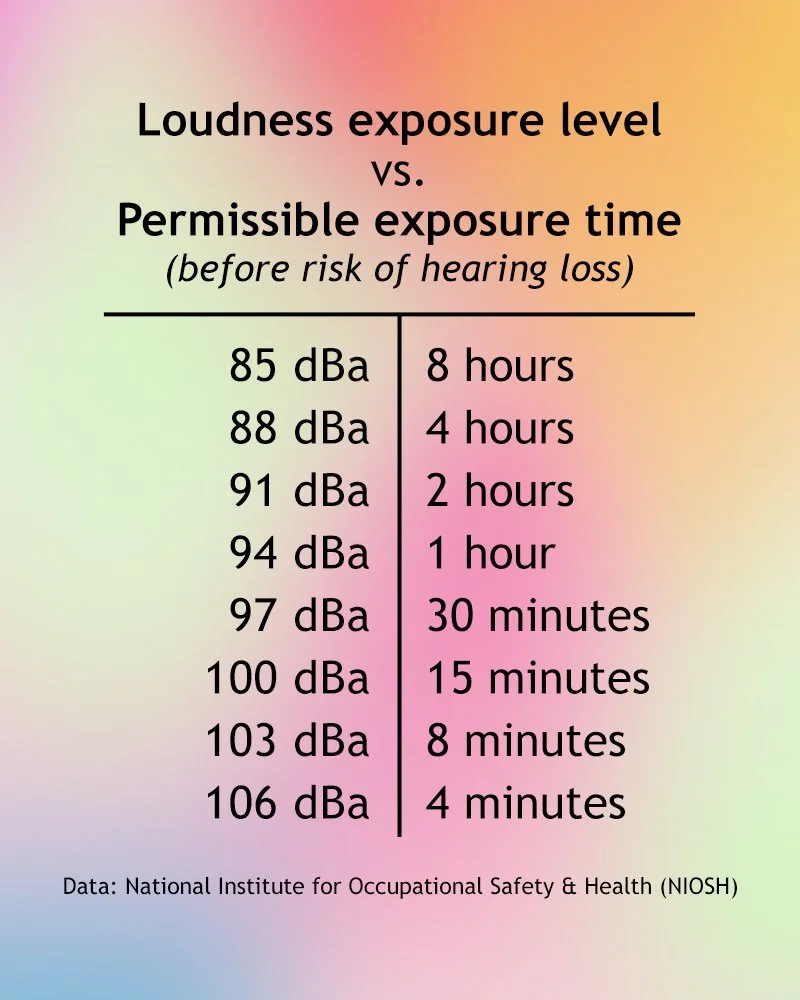
Noise Dose = Volume × Time
Sound exposure dosage takes into account both how loud AND for how long. Like sun exposure, the higher the intensity of sound, the less time you can safely be exposed.
Most NYC clubs average 100–105 dBA, meaning safe exposure time can be just minutes, not hours. It's worth noting that music levels loud enough to damage your ear can feel both comfortable and enjoyable for a time.
If your ears ring or sounds feel muffled after an event, that’s a sign you exceeded your safe dose. Just because your hearing “comes back,” doesn’t mean no injury occurred. Hearing damage is cumulative and repeated temporary injury can lead to permanent hearing loss and chronic tinnitus.
Measure, Don't Guess
Use a free sound level meter phone app like NIOSH SLM—which is accurate to ±2 dBA—to measure the sound pressure level (SPL) of your environment and your dosage. Loudness is subjective, SPL is objective—this is important! Know what you're being exposed to, don’t guess.
Earplug Choices
Foam earplugs: Usually available at venues if you ask a bartender. Foamies offer a lot of ear protection if there's a full seal, but they muffle the music and some people struggle achieving a good seal.
Universal-fit filtered earplugs: Many popular options available with different designs and filters aimed at flatter attenuation. Cost ranges between $20-60/pair. Usually a big step up from foam earplugs, but some people also struggle with getting a long-term seal. Non-custom earplug guide.
Custom-fit filtered earplugs: Silicone earplugs fit to your anatomy to ensure maximum comfort and proper seal. These use the flattest filters on the market to preserve music fidelity. Filters are also interchangeable for different settings. Cost ranges between $150-400/pair and can be purchased from a manufacturer or audiologist. Ear impression required.
Annual Audiograms
If you often attend or work around loud music events, getting an annual hearing test (with extended high frequencies) from an audiologist is essential for preventative care. Because hearing damage is usually gradual and painless, objective tracking from year to year is the only reliable way to detect early changes to hearing thresholds before it impacts communication, music perception and quality of life.
If you don't track your hearing, once you notice hearing loss or difficulty, it's too late. If subtle changes are caught in an audiogram, it's not too late to change your hearing health protocol to prevent further damage.
Directory of Music Audiology providers / Sensaphonics audiologist database
Other Tips
-Avoid standing directly in front of speakers! Increasing distance from speaker stacks can reduce SPL significantly.
-Take quiet breaks if you're spending hours at clubs to reduce cumulative metabolic stress.
-Give your ears 12–24 hours of recovery after loud exposure and avoid back-to-back high-dose nights.
-Like any PPE, wearing earplugs does not make you immune from harm. Please wear responsibly and keep the information above in mind!
Other Resources
-Free telehealth audiology program for artists and nightlife workers via MusiCares
-Talking Ears music audiology podcast
-Michael Lawrence’s talk on “Staying Safe While Getting Loud”
-Dr Laura Sinnott’s 2025 NHCA talk on Global Initiatives for Hearing Loss Prevention and the history of how we got loud
-Become a member of the National Hearing Conservation Association
-“How Noise Affects Our Health” podcast episode
-Custom earplug FAQs